
Blog Posts
"Once In A Lifetime Experience" English Language Scholar Report: Chiara Scapicchi
Chiara Scapicchi, our second member scholar from Perugia to study English at the University of Washington, filed this heart warming report about her time living in Seattle and the impact of her scholarship experience.
Spending this past month in Seattle has been a truly once-in-a-lifetime experience, one that I will always be grateful for. It wasn’t just an opportunity to improve my English, it was a chance to connect with people who made this journey meaningful,
especially Germàn (Rodrìguez), the amazing person who made all of this possible. Words cannot express how truly grateful I am to him.
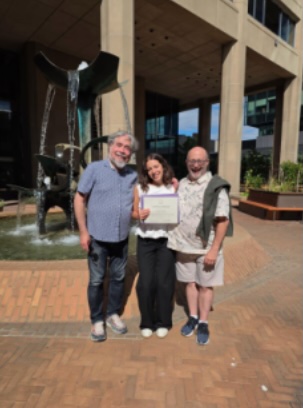
Over the course of these weeks, I had the chance to immerse myself in a brand-new culture, explore iconic places I had previously only seen in photographs, and, most importantly, to meet incredible people who made a big difference in my jo urney. At first, I found it funny to realize thatI was the only European student among almost 80 classmates, most of whom were from Asia. However, this quickly became one of the best parts of my experience. Even though we came from different cultures and spoke different languages, we became friends quickly. We spent a lot of time together after class, and our boat trip on Lake Washington was definitely one of my favorite memories.
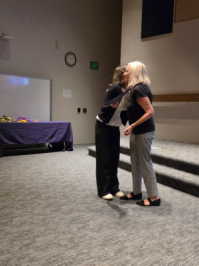
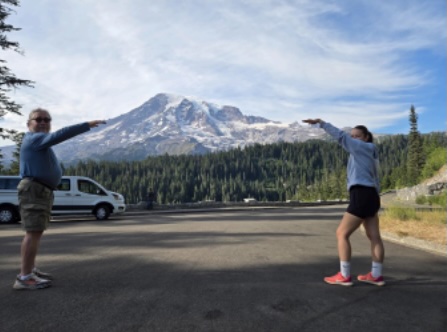
Germàn is truly a kind-hearted person. His warmth, generosity, and kindness made every moment special. Without him, I honestly don’t think this month would have been the same, and Bob (Martin)’s great sense of humor made everything even more fun! Together, we shared many great experiences: a weekend trip to Vancouver, an unforgettable trip to Mount Rainier, and even helping with a wedding! Some guests staying at Bob and German’s house were preparing for their son’s wedding and needed to make almost 400 cookies. So, for one day, our kitchen became a real bakery!
My English course at the University of Washington was also a very important experience for me. It introduced me to a different way of learning compared to what I was used to in Italy. Through interactive lessons, group projects, and everyday conversations, learning English became more fun and natural. This practical approach helped me use English in real-life situations and made me more confident every day.
Outside the classroom, experiencing everyday American life also taught me a lot about the culture. From local trips to simple conversations with people, I learned things that I could never have learned from a textbook.
Heading back to Italy, I just want to say a huge thank you for everything: for every opportunity I had, for all I learned, for the amazing memories I'll always keep with me and to every single person I met along the way.
It’s impossible to name everyone, but I want to thank every person who spent time with me there, even if it was just for an hour.
Cinema Italian Style Film Festival 2026 - November 18 - 22!
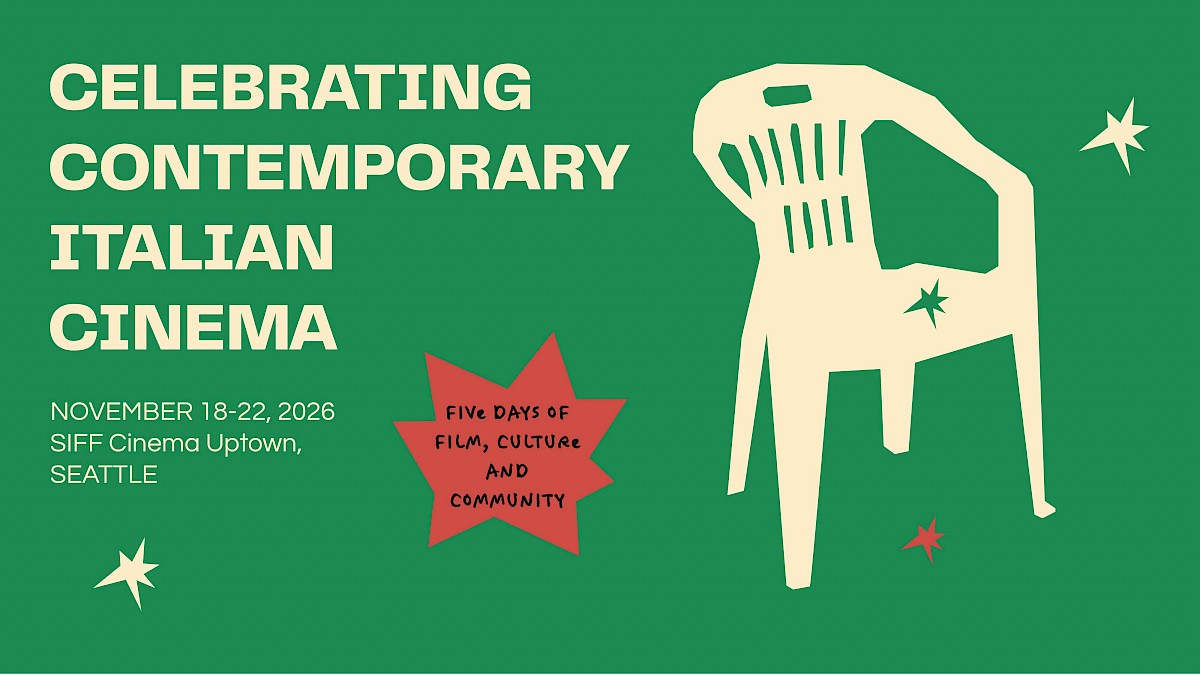
We are excited to announce the dates for this year's Cinema Italian Style Film Festival, coming to Queen Anne's SIFF Cinema Uptown Theater, November 18 - 22!
Seattle's Cinema Italian Style Film Festival gives everyone the opportunity to enjoy the very best in Italian Cinema, with award-winning films, special guests and stories that will transport you to Italy through the magic of the big screen.
Check here for the latest updates Visit Cinema Italian Style 2026, including the film lineup, tickets, passes, special events and a fund-raising raffle with great prizes - more information coming soon!
Cinema Italian Style is proud to be supported by Alaska Airlines, our official Airline Sponsor.
New Sister City Scholarship Program Launches, Continuing A Tradition of Cultural Exchange
Article written by Rita Cipalla as originally published in L'Italo Americano, April 2026
For 33 years, Seattle has enjoyed a vibrant sister-city partnership with Perugia, the capital city of Umbria. Three decades of friendship have resulted in artist exchanges, lectures, food and wine tastings, and an annual film festival. But perhaps most importantly, they have also led to greater mutual understanding, respect, and one-on-one friendships.
One of Seattle-Perugia Sister City Association’s signature initiatives is its scholarship program for adults. Up to four scholarships are awarded each year to association members, enabling them to study Italian language and culture for one month at Perugia’s distinguished Università per Stranieri (University for Foreigners). Located in the heart of the old town, the Università per Stranieri is the oldest and most prestigious institution in Italy engaged in teaching Italian language and culture.
Now for the first time, Seattle will reciprocate by offering two language scholarships to Perugia residents to study for one month at the University of Washington through its International & English Language Programs (IELP). During their residency, the recipients will receive English instruction in the morning and go on guided or independent excursions to cultural sites such as museums and city landmarks in the afternoons.

“As an Italian American educator, I’m excited about this new partnership,” said Darya Anoshei, the IELP’s admissions and outreach lead who, coincidentally, grew up in Spoleto, not far from Perugia. “The scholarship recipients will gain new language skills and confidence while enriching our classrooms and communities with an Italian perspective. Having called both cities home, I know how meaningful it can be to feel welcomed while navigating a new culture. Seattle and Perugia share a spirit of learning, reflection, and connection, making this exchange especially relevant.”
The program’s inaugural scholars are Katia Perruccio and Chiara Scapicchi, both from Perugia. Although born a generation apart, the women are united by their shared passion for exploration and international fellowship.
Perruccio, 54, is a medical doctor and researcher with a specialty in hematology and oncology. She holds a PhD in bone marrow transplants and is the author of more than 100 articles. As the mother of two, she keeps busy with her family and her community when not at work.

Three years ago, Perruccio traveled to Seattle with her daughter to participate in the 30th anniversary celebration of the Seattle-Perugia sister city group. During her upcoming month in Seattle, she hopes to rekindle the friendships she made in 2023 and renew connections with colleagues at the Fred Hutchinson Cancer Center, as well as improve her English.
“My daughter and I were so warmly welcomed when we arrived in Seattle a few years ago,” she recalled. “When I heard that I could spend more time in Seattle studying English and at such a prestigious university, I applied. I’ve never had the chance to study English abroad, and I think it could be very useful for both my job and my personal growth.”
Twenty-year-old Scapicchi, a second-year business administration student at the University of Perugia, hopes that increasing her English proficiency will open doors professionally as well as personally. “My main goal is to strengthen my English and fully immerse myself in an international environment,” she said. “At the same time, I’m excited to meet people from different cultures and build connections. From a professional perspective, being able to communicate effectively in an international context is essential in today’s world. I know this experience will help me become more confident and better prepared for future academic and career opportunities.”

The scholarship program was made possible through the efforts of the Seattle-Perugia Sister City Association board of directors, in particular, President Emeritus Germán Rodríguez and board member Elisabetta Valentini, who also serves as the honorary consul of Italy in Seattle. University of Washington support was led by Chris Thomas, director of International & English Language Programs, and admissions and outreach lead Darya Anoshei. In Perugia, scholarship committee members are Donatella Brigiolini, Olimpia Bartolucci, and Lorena Falcinelli.

While in Seattle, both students will be hosted at the home of Germán Rodríguez, whose financial support made the first year of scholarship awards possible. Sister city members are busy planning several events and activities over the summer months to welcome the two students.
“After years of planning, we’re excited to finally launch this inaugural scholarship program with the University of Washington and our cohorts in Perugia,” said Rodríguez. “It shows how much can be accomplished by people who commit their time, talents, and resources – and how just a few individuals can make a real difference.”
Meet our 2026 Perugia Scholars!
In April 2026, the SPSCA Scholarship Committee awarded four scholarships for a month of Italian language study at the Università per Stranieri di Perugia. Our Scholarship Program is a major way for our members to connect and collaborate with our counterparts in Perugia.
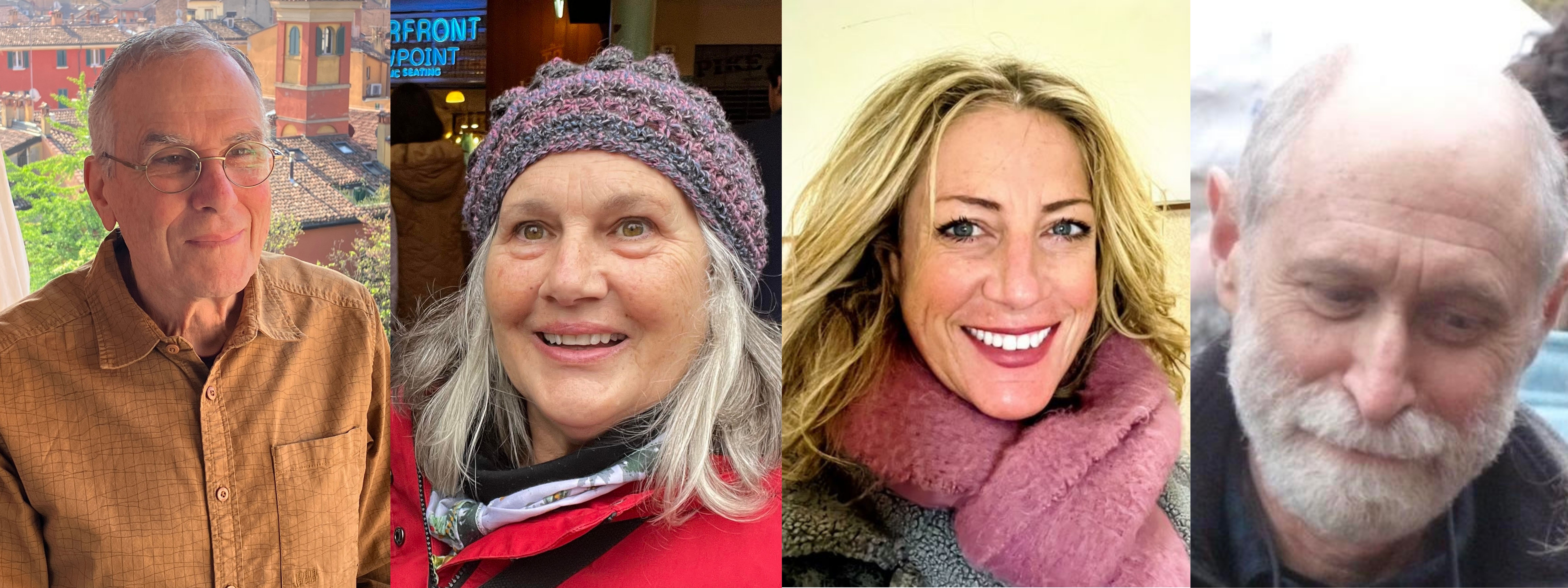
2026 Scholars from left to right: John LaManna, Karen Rosatti, Shandra Sgobba, and Peter Greenfield
John LaManna, a Seattle-based retiree, is proud of his Italian heritage. He has been visiting Italy since 1988 to connect with his family and build lasting friendships, all while continuing to study la bella lingua. A longtime member and volunteer with SPSCA, he has supported the organization since the 1990s and contributed to the restoration of the Fontana Maggiore in Perugia's Piazza IV Novembre. John looks forward to connecting with SPSCA members in Perugia, sharing cultural experiences, and inspiring future visits to Seattle.
Karen Rosatti traces her roots back to Sigillo, a piccolo paese in Umbria. Part of her family left Italy and settled in Minnesota, where she spent memorable times with relatives learning about Italian culture, traditions, and of course, food! Now a retired teacher living in Kirkland, she has been an active SPSCA member by volunteering and serving on the board. Her first time in Italy was on a business trip with a commercial fishing company, offering a unique introduction to cities like Rome, Venice, and Milan. Karen is excited to spend a month in Perugia, soaking in the culture and learning Italian piano piano... one step at a time.
Shandra Sgobba, a Seattle hairstylist, credits cherished memories of her nonna, full of warmth and generosity, for sparking her passion to discover her Italian heritage. Since 2022, she immersed herself in the language, even adopting a household "rule" of watching only Italian films and TV. She has traveled extensively throughout Italy, forming friendships that helped uncover family roots. A SPSCA member for two years, she especially enjoyed volunteering at Cinema Italian Style 2025. Shandra hopes to use her Italian to help her connect her Italian American and Italian families, and inspire more relatives to visit Italy.
Peter Greenfield has studied Italian snce his retirement through courses offered by the Dante Alighieri Society of Seattle and PercorsoItaliano. A longtime SPSCA member, he co-leads La Tavola Italiana, an online Italian conversation group alongside Rebecca Albiani. In addition, he shares his love of the language by hosting Italian film nights at his retirement community. Before and during his career as a lawyer, Peter studied multiple languages, including Latin, Hebrew, German, French, and Spanish. After several trips to Italy over the past 15 years, he looks forward to sharpening his conversational fluency during his month in Perugia and deepining his connection to the culture.
SPSCA would like to thank one of our longtime community partners, Caffè Umbria, for their generous contribution to fund one of our 2026 scholars!
Moreover, many thanks to our Scholarship Committee and to everyone who applied! If you’d like to be considered for a future scholarship, please get involved. Come to the wine tasting, attend our annual picnic, practice your Italian at La Tavola, or propose an event. Help us get to know you before we read your application!

Two Raffle Winners Announced at Opening Night for Cinema Italian Style
Thanks to our sponsors at Alaska Airlines, two lucky winners were each awarded a pair of roundtrip business class travel vouchers. As per the contest rules, the first drawing occured on November 12, 2025 just prior to the screening at SIFF Cinema Uptown of the festival's sold-out opening night film "Parental Leave". Alaska Airlines CEO Ben Minicucci was on hand to select the winning raffle ticket and presented the two business class vouchers to the raffle's first winner Rachel Solimeno.
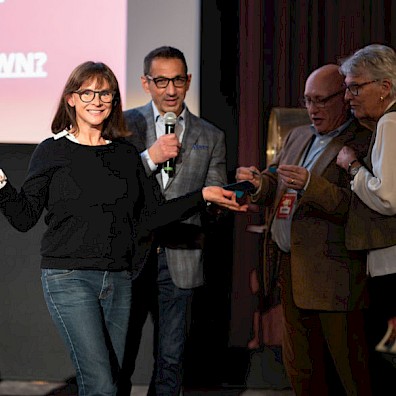
The 2nd drawing was also held on November 12th at 9:45PM during the festival's Opening Night Party at KEXP Gathering Space. Over 350 guests were on hand to see Massimo Carnelos, Consul General of Italy, draw the winning raffle ticket and present the second pair of business class travel vouchers to our second winner, festival attendee Valerie Berberoglu.
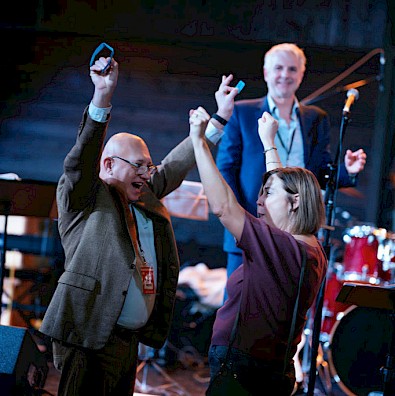
Proceeds of raffle tickets sales will be used to cover costs of this year's festival and help fund next year's event. Thank you to everyone who purchased raffle tickets for supporing the festival!