Blog Posts
I came as an educator to learn…
Written by 2026 October Scholar Karen Rosatti
My experience with Seattle Perugia Sister City Association (SPSCA) began more than four years ago, when I began to study the Italian language, after retiring from teaching. Going from teacher to learner, at my young age, was not an easy feat. I learned humility and patience (for myself) along the percorso. And, as my love for learning Italian expanded, so did my drive to share my growing knowledge with others.
Almost two years ago, having had a long appreciation for children and a personal drive to teach, the opportunity came up to begin a partnership between students in Perugia and Seattle. I initiated the Amici di Penna (Pen Pals) project between Perugini and Seattle elementary students. It is a wonderful way to introduce students of the same age, yet very different cultures, writing skills and cultural engagement through personal letter writing.
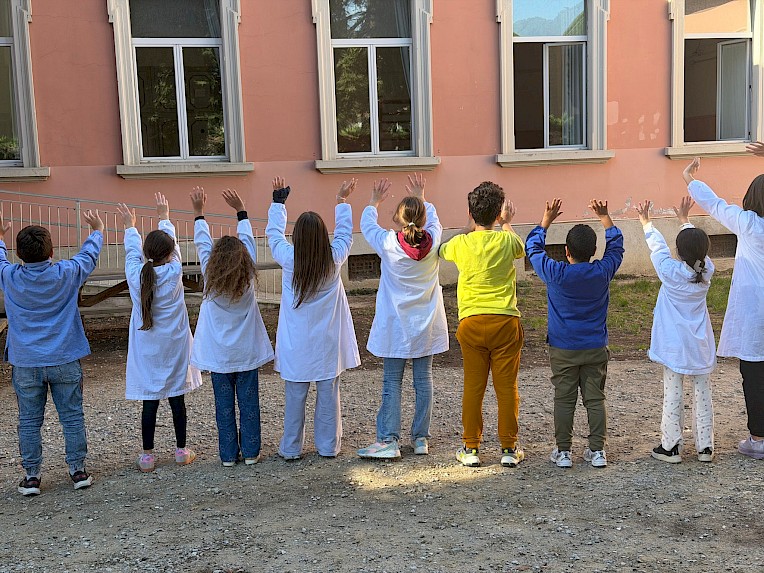
When I applied for a scholarship to the Università per Stranieri, it was initially to improve my own Italian language skills. And, what those skills have given me is the opportunity to expand my engagement and connection with the Perugini elementary educators. The richest experience I have had in Perugia has been the ability to collaborate with my Perugini teaching colleagues. I have been able to visit Perugia elementary schools and meet students that my class has been writing to, as well as meet new teachers and students joining the program this year, which has tripled in size in both students and classes from last year. Improving my ability to communicate and collaborate with Perugia’s teachers allowed me to better share information about the unique characteristics of individual schools, as well as the significant differences between the American and Italian school systems. Teacher-to-teacher and student-to-student will continue to strengthen and expand this unique connection for Seattle and Perugia.
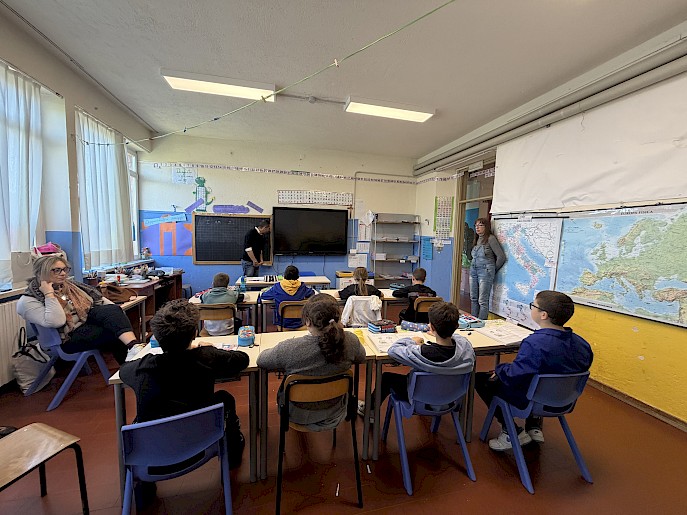
I expected to enjoy my studies at the Università, even to possibly meet with other teachers in Perugia. I did not expect such a wonderfully welcoming and shared mutual interest from the Perugini school partners. I have felt a true commitment and warm appreciation for our connection. Being invited to visit the schools has been the frosting on the cake for this opportunity! Communication has many aspects, one of them is simply language. My SPSCA scholarship not only gave me the opportunity to attend the Università, it allowed me to improve my language skills, and in this way improve my communication with Perugini having the same interest. I look forward to an even stronger collaboration through the years.
I look forward to continuing the opportunity to pay forward my own learning to Seattle teachers and students. I leave as a learner continuing to educate….
Thank you Seattle. Thank you Perugia.
Thank you Seattle - Perugia !!
Grazie mille SPSCA.
Karen
Gemelle Sorelle: Finding family and friendship in Perugia
Written by 2026 October Scholar Shandra Sgobba
I enter my flat in Perugia, open the shutters, and gaze toward rolling hills and rooftops. A deep sense of humility washes over me, and I take a picture to remember the moment. My Italian language classes begin tomorrow, and I feel excited and hopeful for what lies ahead. I say a prayer of thanks to the friends and family who have encouraged and supported me, and reflect on the journey that has brought me here.
Last year, after speaking with recent scholars at Cinema Italian Style, I began considering an application for the scholarship. The graduates had just returned from Perugia, and spoke enthusiastically about their experiences, sharing photographs and Baci chocolates. Although I felt insecure about my beginner-level Italian, they encouraged me to apply. I knew I needed something to reignite my motivation to study, so I decided to take a chance.

I grew up in an Italian-American household, but the only words I remember from childhood are “Mangia, mangia!”— delivered emphatically. Then I began working as a waitress in Italian restaurants, where I developed an appreciation for the dishes and wines from the varied regions. I was drawn to the warmth and vitality of Italian culture and dreamed of visiting Italy one day to discover the roots of my father's family, the Sgobbas.
When my nonno passed away, I inherited a copy of his memoirs. He was raised by immigrant parents and grandparents and had a difficult childhood, but the stories he chose to share were about working in the vegetable garden, making wine in the cellar, and running numbers for the local mafia. Intrigued, I travelled to the town outside Boston where he grew up, but there was little to see besides a bowling alley and a pool hall.
Then my sister Joy began researching our ancestry online. She uncovered the names of distant relatives and the towns where they had lived. She was unable to travel at the time, so in 2022, I packed a suitcase, including a T-shirt emblazoned with SGOBBA across the front, and flew to southern Italy by myself.
While renting a bicycle in Puglia, something serendipitous happened. A woman named Chiara noticed my Seattle address and unusual surname and contacted me by email. She told me she appreciated Seattle's music scene and that her nonna had the same surname as mine. As I was getting lost cycling through olive groves something magical was taking shape. We wrote to each other a few times, including our families names and birthdates, trying to find connected limbs in our ancestral trees. I vowed to return the following year so we could meet..
It was raining hard when Chiara picked me up at the train station. She introduced me to her closest friends and family and explained that they had all been working hard to uncover clues about my relatives. Thanks to their persistence and a little luck, I connected with some distant cousins, while Chiara translated and filmed our gathering.
Sadly, we discovered that Chiara and I weren't related by blood. But then she and her family did something extraordinary. They decided that although we weren't technically family, we belonged together so they adopted me. I sat at their table for four long hours, surrounded by animated conversation and seemingly endless amounts of food. I longed to understand their stories, follow their conversations, and laugh at their jokes. I wanted to be part of it all, rather than simply smile and hope I had understood correctly. And that is where my desire to learn Italian really took root.
I return to visit Chiara and her family every year, and they patiently cheer me on as my Italian improves. When they learned I would be studying at the University for Foreigners in Perugia, they planned a trip to encourage me.( They took three trains to get there without a single complaint!) I proudly showed them the Sister Orca statue, sharing a little piece of my hometown with them. I hope that one day they will visit Seattle, and I can return their hospitality.
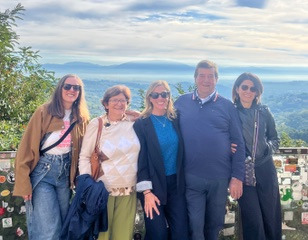
Soon after arriving in Perugia, I was invited to a welcome party at the home of Marialucia. There, I met members of SPSCA from Perugia and was treated to an exquisite aperitivo of homemade bread and dolci.The table she set was a work of art and the food was remarkable! She made us feel at ease, asking about our interests and experiences and genuinely caring about what we had to say. I was particularly proud that I could converse in Italian. Several other members arrived bearing gifts, and my biggest regret so far is that I neglected to bring her a gift. (So, future scholars reading this: don't forget to bring one!) Then, MariaLucia took us up to her rooftop terrace, where she lit two candles representing the relationship between Seattle and Perugia. She used the word gemelle—twins—instead of sorelle, meaning sisters, to describe the relationship between our cities. The distinction intrigued me. Twins share a special bond, but sisters can come together through circumstance, affection, and choice. Perhaps both words capture something essential about the relationship between two places that have found a special bond across an ocean.

I love taking classes in an ancient palazzo that has been converted into a university. I am meeting students from all over the world, and wish I had more time to spend with them. I want to ask questions, hear their stories, and understand what has inspired each of them to study Italian.
We take advantage of the pausa between classes to squeeze in little conversations, but I am realizing how difficult it is to connect when you have limited language skills. I try to get creative, using expressions and hand gestures to explain myself, but sometimes I feel frustrated. I am the only American in my class, and I feel a certain responsibility for how my classmates perceive me and my country. I want to communicate well, to be curious and open, and to represent myself thoughtfully. Yet I am constantly reminded that I am a beginner, and there is so much I cannot yet express.
I have made friends with a young priest from Zambia, a massage therapist from Venezuela, and a Scottish retiree. Getting to know them is expanding my understanding of the world and my place in it. We are all here to learn, but have arrived with different experiences and expectations. Communicating is about more than grammar and vocabulary. It is about making an effort to understand another person, even when you don't understand the words they are speaking. One day, several students from Kuwait prepared a traditional breakfast for our class. They brought in two kinds of coffee: One was stronger, from the north, while the other was milder, with milk added, from the south. It was such a thoughtful gesture, and a reminder of how much we can learn from each other through the simplest acts of generosity.

People I meet around town seem generous and helpful, perhaps recognizing that many of us are students trying our best to learn Italian.I love sitting on the steps in front of the Fontana Maggiore, listening and watching people pass by. My favorite time of day is sunrise. I try to study, but I am continually distracted by the changing colors unfolding before my eyes. Each time I walk beneath the ancient Etruscan arches, I am awestruck by the layers of history surrounding me. I have taken yoga classes in Italian, walked through underground tunnels, visited museums, and sampled many cafés and restaurants. I have also ventured beyond Perugia to explore nearby towns such as Spoleto and Todi, and the beautiful shores of Lago Trasimeno.
There is so much to discover, and I am learning to appreciate the small moments as much as the grand ones: the first light over the rooftops, a friendly exchange in Italian, a meal shared with new friends, or the satisfaction of understanding a conversation that might once have passed me by. Of course, there are moments when I wish I could express myself more easily. I want to know more about the people I meet and to hear the stories behind their lives. But perhaps the struggle itself is part of the experience. Every conversation is an opportunity to practise, to listen more carefully, and to become a little more confident.

When I visited the Sister Orca statue, I was in awe. She stands so regal and proud and I wonder if people understand how majestic and expansive whales and the Puget Sound are? I pick up cigarette butts and litter near her and feel a sense of kinship with her presence. Seeing her in Perugia brings my two worlds together. I had travelled to Italy to explore my family's history, but I was discovering connections that went far beyond genealogy. I met Chiara by chance, and she and her family chose to adopt me, even when our family trees revealed no direct connection. Their generosity opened a door to a world I had long wanted to understand. It also gave me a reason to keep learning Italian: not simply to speak another language, but to participate more fully in the lives of people I love.
In Perugia, I am discovering another kind of sisterhood through the people who have welcomed me into their homes and community. I feel fortunate to be studying in a twin city, surrounded by people who have given me encouragement and kindness. I find myself wondering how I can give back. Perhaps it begins with small things: welcoming a visitor from another country, sharing a meal, or helping someone else feel at home in an unfamiliar place. Maybe it means carrying the spirit of Perugia back to Seattle and continuing to build connections between our communities.
As I reflect on my journey, I am reminded of a sentiment often attributed to Chief Seattle: that the Earth does not belong to us; rather, we belong to the Earth, and all things are connected. Perhaps belonging to a family, or a city isn’t inherited. Sometimes it is a feeling or a chance discovery. Maybe it is something we build, one conversation, one shared meal, and one act of kindness at a time. And sometimes, if we are lucky, we find ourselves surrounded by sisters in places we never expected.
Midway through a month of study in Perugia
Written by 2026 October Scholar Peter Greenfield
I realized, as I sat down to write this note, that I'm more than halfway through my month of study in Perugia. It's been a stimulating and satisfying time, and the first time I've both had daily intensive classroom study in Italian and been able to live mostly in Italian when not in class. (Writing this note in English is an exception.)
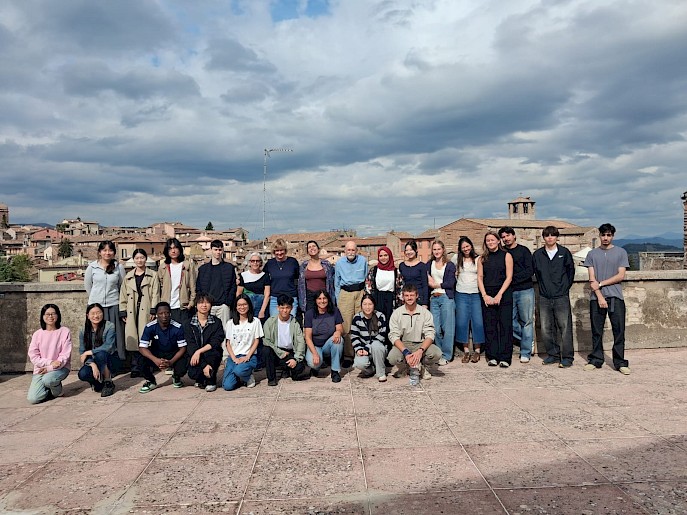
I'm studying with talented and enthusiastic teachers and with serious students from four continents, many whose Italian is better than mine. They come from Brazil, Burkina Faso, China, England, Germany, Greece, Hungary, India, Indonesia, Japan, Poland, Yemen, the U.S. and probably from some other countries I'm missing.
The students and the teacher in my class in Italian language skills (with the elegant title "Competenze linguistiche avanzate"), recently gathered for a picture on a terrace of the Palazzo Gallenga, where classes are held. Most are even younger than I am – by some forty or fifty years.
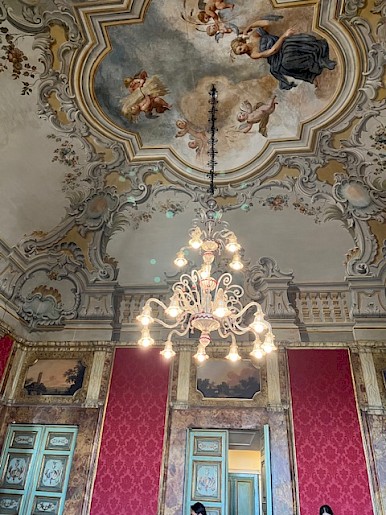
The sun was very bright when the picture was taken, so all eyes were just barely open.The Palazzo Gallenga is a beautiful 18th century building, originally the (more than spacious) home of a wealthy family. The room that now serves as the classroom for my language skills class is on the third floor (the fourth floor as we count) and has what is probably a 40 ft. ceiling and intricate frescoes on the walls. Most students reach it climbing more than a hundred stairs, but there are now elevators. Similarly, the most direct route from the apartment I rent includes some 300 (small) stairs, but there are alternate routes with an elevator (that goes uphill at an angle) and with escalators.
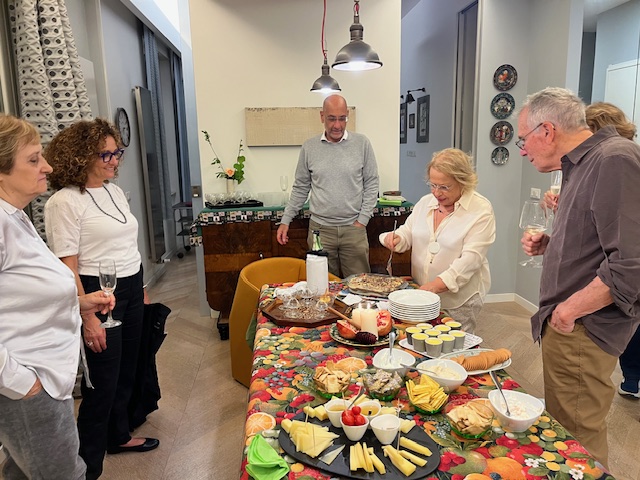
A few days ago, members of the Comitato di gemellaggio Perugia Seattle, the Perugia counterpart to Seattle's Seattle Perugia Sister City Association, hosted Seattle's four current scholarship students at a warm social gathering and encouraged us to consider them as resources during our stay in the city – one of the benefits of our scholarship program.
This mid-October afternoon, with bright sunshine and the temperature just above 70 degrees, is a perfect time to wander around Perugia's historic center or surrounding neighborhoods, as I like to do. Some years ago, my wife and I visited Perugia, and I've spent some time trying to find the place where we spent a very pleasant week together. I've lost the address and my efforts so far have been unproductive. I've noticed that the experience might serve as a metaphor for one dimension of my life these days. At home in Seattle, since her death last year, I've often caught myself looking for her in places I was accustomed to seeing her, before remembering that I would never find her.
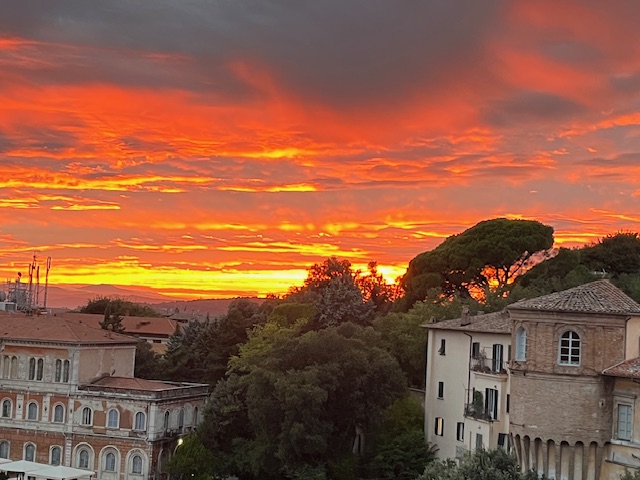
The daytime in Perugia in October is lovely. But the early evening is often spectacular.
One lucky borsista
Written by 2026 October Scholar John LaManna
I arrived in Piazza Partigiani about 6:30 pm after two sleepless flights and a long bus ride. After wandering around for about 15 minutes with a lot of luggage, I found the taxi stand. There were no taxis but there was a taxi sign with telephone and WhatsApp numbers. I called. Ten minutes later a taxi arrived.
My destination: via Bontempi, a ZTL in the centro storico. The taxi driver refused to take me any further than Piazza Piccinino, located at one end of Bontempi. He told me the apartment was only 100 meters further. So off I went into the fading daylight with my wheeled luggage on the rough sandstone pavement of via Bontempi.
The address numbers were hard to see. I reached a travertine arch and descended a long curved stairway. When I reached the bottom, the street lights came on and I discovered I had gone too far. So I went back up the stairs. About half way up, I encountered a young Italian man going in the opposite direction. He stopped and asked if he could help me. How nice is that?
Below is a photo of the stairway near the entrance to my building.

I found my apartment and was warmly welcomed by my host, Maria Rita. My Italian was good enough that we had a very pleasant conversation for about 20 minutes. In spite of my jet lag, I was feeling good about my host and being in Perugia. When it comes down to why I wanted to attend the Università per Stranieri di Perugia (Unistrapg), it was because I envied those people I’ve met over the years who had done this. These were people I respected for their commitment to learning Italian and immersing themselves in the culture. I’ve attended private Italian language schools before. But Unistrapg turned out to be a better school for me because of how Unistrapg organizes its semesters. Private schools often have to rearrange classes on Mondays because new students arrive and some existing students leave. The changing student body make it difficult for the teachers to follow a curriculum.
Unistrapg is organized around a 3-month semester and a one-month minimum enrollment. As a result, I have made much faster progress at Unistrapg. It is really a university experience. I was placed in the B1 language proficiency group based on my entrance exam results. Near the end of the first week, it was obvious to me that I should move up a level. I asked and was allowed. The next level, B2, was the right one. While it took some time to get everything sorted, at the end, my teacher complimented me on my patience. What I learned was to smile, be polite, and be gently persistent.
Below is a photo of the fossiliferous limestone on the walls of Unistrapg’s Aula Magna. Unistrapg’s building has many beautiful and interesting architectural details such as this.

One of my pleasures in Perugia is learning my way around the centro storico. It is a three-dimensional maze of narrow winding streets, ZTLs, long curved stairways, arches, tunnels, escalators and elevators. The ninety-degree angle has been used sparingly over the centuries. One consequence of this maze is there are not a lot of automobiles, motorcycles and bicycles in the centro storico. This enhances the tranquility of the historical neighborhoods and pleasures of walking or relaxing outside. Below a photo of the entrance of via Volte della Pace. The name refers to a peace treaty the Etruscans negotiated here and the vaulted medieval ceiling. This is a typical street in the centro storico.
 I’ve been patronizing Osteria Il Gufo. This restaurant is operated by Luca Pisauri, an affable man. Luca was part of our sister city exchange in 1997. I attended a cooking demonstration he did at the (former) downtown Seattle Bon Marche department store. It was in the kitchen department on the third floor. He cooked on a stove with a mirror for the audience. It was standing room only. He prepared Umbrian dishes using ingredients that he had brought, like truffles.

I approached Luca and told him I would be in Perugia the following year and I would very much like to celebrate my pop 50th birthday at his restaurant. He gave me his card. The following year I showed up at his restaurant a few days before my birthday and before the restaurant was open for diners. We discussed some dishes and agreed on a price (it was in lira then). Luca told me to arrive at 8 PM on my birthday. I arrived with my wife and another couple. Luca did not disappoint. It was one of my most memorable birthdays. And it wasn’t all about the food. Luca really enjoyed making it a celebration. He knew just what to do. I have been buying my “good” olive oil for many years from San Potente, an agriturismo near Assisi. It is a quality product. I contacted the owner and asked if I could watch the harvest and milling during my month in Perugia. The owner agreed but put me to work as soon as I arrived. I lasted only about 20 minutes using the power shaker tool on the trees. I did much better helping with the preliminary cleaning of the olives. A box of olives is poured into the hopper of fan-cleaning machine. I removed twigs and leaves from the hopper while olives fell out of the bottom of the hopper and through an airstream that blew away the leaves from the olives. I did this for about two hours. Below. a photo of me helping remove leaves and twigs from olives.

The best part came next. We took the day’s harvest to a mill (frantoio) in Foligno. This was a busy place because it was the weekend and small family farms as well as businesses like San Potente were arriving with their olives. I saw people helping each other unload boxes of olives. A few people brought their kids. San Potente brought their day’s harvest of olives in 4 tub skids (large forklift boxes). Small family farms brought their olives in boxes about the size of bankers’ boxes. They had their little cars filled with boxes of olives - even on the front seat. These they poured into tub skids at the mill. The people working at the mill carefully labeled all the tub-skids. It is very important to keep everyone’s olives and oil separate. The mill weighed the tub skids and gave the owners receipts. The mill charges the owners by this weight. Next, one owner’s tub skids are dumped into the hopper of a conveyor belt. This is done only after the previous owner’s olives have been milled and the hopper is empty. The olives go through another blower to remove leaves, are washed with water, and are fed in batches into an extractor called a gremola (accent on first syllable). This machine has an auger with paddles that churns the olives into a paste. This kneading process lasts about 20 minutes during which the olives release their oil and the oil drops coalesce. Next, the pulp goes into the first centrifuge. This separates the solids from the liquids. The liquid portion then goes to the second centrifuge. This separates the olive oil from the water. The olive oil is collected, weighed, and poured into a vat with the owner’s name on it. The weight of the oil is used to calculate the yield. The olives from San Potente that day had a 16% yield: pretty good. Attention is paid to quality. San Potente is proud of the olive oil they produce. By extracting it the same day the olives are harvested, there is almost no acidity. The mill does not allow the olive oil to get too warm during the milling. Owners’ olives and oils are meticulously kept separate. Everyone seemed to know each other and appeared to work in harmony. The San Potente person I was with watched everything from the time his olives arrived until the last drop of oil was captured and weighed. Below a photo of me with a bottle of olive oil from olives harvested earlier the same day. The oil is cloudy because it hasn’t yet been filtered.
 Maria Lucia Luongo arranged an aperitivi with Seattle-Perugia Sister City Association (SPSCA) members and Comitato di Gemellaggio Perugia Seattle (Gemellaggio) members Olimpia, Lucio, Donatella and Lorena at her beautiful home. I was proud of our SPSCA members’ ability to maintain conversations in Italian. The Gemellaggio members are very friendly and easy to converse with. I look forward to the day they will come to Seattle and I will be able to spend more time with them. Below is a photo of the aperitivi table setting, my SPSCA colleagues and the Gemellaggio members in Maria Lucia’s home. Maria Lucia (wearing all white) made and served aperitivi drinks and snacks.
 I have had valuable and memorable experiences during my month in Perugia. This would not have happened to me if it were not for the generosity of the SPSCA. Thank you SPSCA for awarding me the scholarship and stipend to study in beautiful Perugia at Unistrapg, with its good instructors, beautiful architecture, and interesting international student body. It has been both an inspiring and pleasant place for me to improve my Italian. Alla fine, I feel like I am one lucky borsista.
"Once In A Lifetime Experience" English Language Scholar Report: Chiara Scapicchi
Chiara Scapicchi, our second member scholar from Perugia to study English at the University of Washington, filed this heart warming report about her time living in Seattle and the impact of her scholarship experience.
Spending this past month in Seattle has been a truly once-in-a-lifetime experience, one that I will always be grateful for. It wasn’t just an opportunity to improve my English, it was a chance to connect with people who made this journey meaningful,
especially Germàn (Rodrìguez), the amazing person who made all of this possible. Words cannot express how truly grateful I am to him.
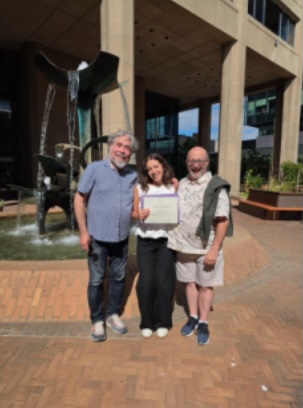
Over the course of these weeks, I had the chance to immerse myself in a brand-new culture, explore iconic places I had previously only seen in photographs, and, most importantly, to meet incredible people who made a big difference in my jo urney. At first, I found it funny to realize thatI was the only European student among almost 80 classmates, most of whom were from Asia. However, this quickly became one of the best parts of my experience. Even though we came from different cultures and spoke different languages, we became friends quickly. We spent a lot of time together after class, and our boat trip on Lake Washington was definitely one of my favorite memories.
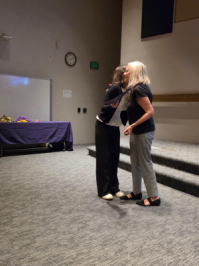
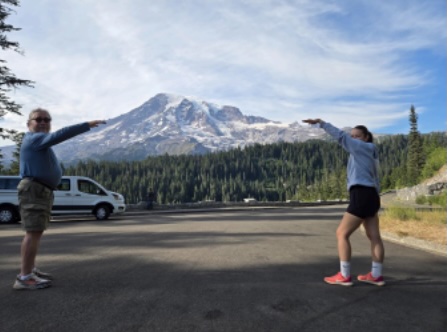
Germàn is truly a kind-hearted person. His warmth, generosity, and kindness made every moment special. Without him, I honestly don’t think this month would have been the same, and Bob (Martin)’s great sense of humor made everything even more fun! Together, we shared many great experiences: a weekend trip to Vancouver, an unforgettable trip to Mount Rainier, and even helping with a wedding! Some guests staying at Bob and German’s house were preparing for their son’s wedding and needed to make almost 400 cookies. So, for one day, our kitchen became a real bakery!
My English course at the University of Washington was also a very important experience for me. It introduced me to a different way of learning compared to what I was used to in Italy. Through interactive lessons, group projects, and everyday conversations, learning English became more fun and natural. This practical approach helped me use English in real-life situations and made me more confident every day.
Outside the classroom, experiencing everyday American life also taught me a lot about the culture. From local trips to simple conversations with people, I learned things that I could never have learned from a textbook.
Heading back to Italy, I just want to say a huge thank you for everything: for every opportunity I had, for all I learned, for the amazing memories I'll always keep with me and to every single person I met along the way.
It’s impossible to name everyone, but I want to thank every person who spent time with me there, even if it was just for an hour.